Friday, April 05, 2013
Let us turn our thoughts today...
I've been really trying to get on here more often, but the last two days were Crazy Eddie's prices insane for me, and I missed out on commemorating the day of my birth, which just happens to be the same day a great man was shot down. Mere hours after I came into this world, he went out. I don't have the time or the words today, so I'll let JT's words do what I could not this year.


Tuesday, April 02, 2013
Three Cheers For Ischemia!

The GOP mind is a jumble, eh?
After much speculation regarding Senator Lisa Murkowski (Chilling - Alaska) being the next to "evolve" (mainly due to her resemblance to former Tennessee basketball coach Pat Summit, I suspect), it turns out the person who was willing to double the number of Republican senators who have publicly voiced the belief that gays are fully human was Sen. Mark Kirk (Slurry - Illinois), who recently returned to the Senate following a stroke he suffered last year, and who today announced he was in favor of gay marriage.

Let's hear it for temporary blood loss to the brain! Yay!
From Sen. Kirk's statement:
"When I climbed the Capitol steps in January, I promised myself that I
would return to the Senate with an open mind and greater respect for
others. Same-sex couples should have the right to civil marriage. Our
time on this Earth is limited, I know that better than most. Life comes
down to who you love and who loves you back—government has no place in
the middle."
Based on those words, it seems the thing that might lead to a more harmonious America for all people, regardless of race, color, creed, sexual orientation, or political persuasion are more strokes for Republican senators.
(Ummm....as Sterling Archer might say, "Phrasing!")
While it is a little sad that a guy had to nearly die in order for him to wake up to civil rights, it's at least one small, shaky step in the right direction.
So, hey, Heidi Heitkamp (Dem-ish - North Dakota), you're now to the right of Rob Portman and a guy with partial brain damage. Think you might wanna do somethin' about that?
You betcha!
Wednesday, March 27, 2013
What Scalia, Alito and Thomas Are Likely Seeing

And what leads to Westboro Baptist again?
Think I'll go red for a while in support of marriage equality. It's a little out there and in your face now that I see it all over the blog, but isn't that appropriate for a day like today?
As someone who grew up in the pre-internet, pre-we-are-all-connected, pre-it's-not-nice-to-beat-queers-with-a-stick version of America, I was pretty lucky in that I never cared whether someone was gay or straight, black or white, or a Star Trek or Star Wars fan (I was bi about that latter). Even so, growing up in the mid-west in the 70's meant not a lot of exposure to people who were different from me, so my belief in equality was all very intellectually easy until I moved to NYC in the 80's. It was only once I lived in the city that never slept and found that being a straight, white male made me a little bit of a minority myself (at least in the circles in which I hung) that I found out exactly how easy it really was to believe people were people no matter the color of their junk, or who they liked to rub it up against.
But I always wanted to thank the boys down on Christopher Street, because the best place to play pool in my area was a gay bar/pool hall in which my friends and I were decidedly minorities. Now I realize what a haven Christopher Street was if you were gay in the 80's, but back then I had no clue that perhaps I was intruding on what was one of the few safe public spaces those guys had back then. Despite this, we were accepted from the get go, and no one ever looked at us sideways or expressed any desire that we move on to one of the straight dives a few blocks away that were not as nice or as safe as the place we had found just a few blocks away from our NYU dorms. And while I never had a specific "we are all the same" epiphany moment, the fact that people who had been so persecuted all their lives could be so accepting of us no doubt cemented in place the idea of equality that my childhood naivete had always assumed was the natural state of being in the world. Not only were these guys who kiss guys not in the least bit threatening, but they were as decent and as kind as you would ever hope any people would be, but which often most people, in my experience, were not. Quite frankly, I think my time there left me with the subconscious belief that gay people were not just equal, they were likely superior.
Within a year I had moved away from that part of town, and so my time spent there was brief. Perhaps I only visited that establishment all of a dozen times, maybe less. I don't even remember the name of it, and I couldn't even say for a fact that it was located on Christopher Street itself, rather than on one the side streets that branched off that small enclave to the West and South of Greenwhich Village proper. But two things stand out to me about those days. One is that I remember quite clearly our 18-year old giggly musings once we realized where we were playing pool, and two was that I never really giggled or thought twice about a person's sexuality again after my time down on Christopher Street.
So here is to all of those young men who exhibited the patience of Ghandi and taught us all lessons in morality simply by example. Just getting this hearing was one step forward, and I can only but pray that the ruling to come makes this day about more than symbolism alone. But I know for certain now, as I believe do all the bigots desperately fearing the days to come, that eventually you'll be able to marry in my mid-western back yard sooner rather than later. It was a long time coming, and it's a long way from Christopher Street to NE Ohio, but if you want to drop me a line, I'll be happy to pay for all the pool you want to play when you are here.
Tuesday, March 26, 2013
Zero Dark Literally

Sometimes a cipher is just a cipher
When it comes to movies these days, I'm usually pretty late to the party. The joys of my 50-inch plasma screen mixed with my deep seated aversions to out of focus imagery, over cranked air-conditioning, and rude morons yakking in my ear have caused me to pretty much abandon theater going for any reason other than to make some sort political/financial statement. If, say, Joss Whedon or Terry Gilliam have a new film out, then I'm going to make the trip just to put my money where my mouth is in the hopes that those under-appreciated (heretofore in Whedon's case) filmmakers get to make more movies. And occasionally (very occasionally) there will be an action film that looks promising enough that I want to experience it via the big screen, although this latter case usually (very usually) ends with bitter disappointment and much oath swearing regarding my intentions to forgo the next big budget spectacular-spectacular that everyone says is great.
All of this is to say that I am woefully behind the curve when it comes to movies, so I don't usually write about them. It's not to say that I don't love movies, and it's not to say that I don't consider myself fairly knowledgeable about movies (even more so now, as you are about to learn), but rather it's to say that I don't go to movies. No, what I do is rent movies. And the lag time that makes that possible tends to put me at least six months behind the conversation of the moment, which makes it pretty hard to write about movies. Of course, one glance at this blog will tell you I don't usually write about much of anything, but I don't write about movies even more than I don't write about other things.
In a sense, however, this rant isn't really about a movie. I come here neither to praise nor to bury Zero Dark Thirty, but rather to bitch a bit about the death of American film as a subtle experience, thanks to the apparent death of subtlety itself. Because the reaction to Kathryn Bigelow's film---or perhaps I should say the overreaction---is just another depressing example of the literalism that has overtaken every aspect of the American experience.
In the months following Zero Dark Thirty's release, I did a fair job of avoiding any conversation about the particulars of the film (Did they get Osama Bin Ladin? I had no idea!), but I would have had to cut off my ears and pluck out my eyes in order to avoid all the outrage pouring forth from the film's detractors regarding its alleged promotion of torture for fun and profit. Many people, especially those who had not, I would later learn, actually seen the film, were besides themselves over what they believed to be the rah-rah nature of the film in general, and the we'd-never-get-anything-accomplished-without-torture stance that they had taken away in particular. In fact, the early wave of that particular criticism was so pervasive that it was directly responsible for my having moved Zero Dark Thirty from the top of my list of must see movies of 2012 to the bottom. I still wanted to see it, mind you, but I decided I was going to wait for the DVD to become available via Red Box rather than spending the cash for VOD or, god forbid, actually going to a movie theater.
And so that is how it came to pass that I didn't actually see Zero Dark Thirty until yesterday, several months too late to really take part in the debate that raged across the cable-net-o-sphere in the most hectoring and pedantic manner possible.
Of course, that's not such a bad thing, I now understand, because it turns out that most of the people who I would have been arguing with also never saw Zero Dark Thirty. Glenn Greenwald, one of the commentators who led the attacks on the film from the pages of The Guardian admitted as much, and he was outraged that you were outraged that he was outraged at a film he hadn't even seen.
After all, not seeing a film you are condemning has a long and proud tradition. I can remember being a young man in New York City and arguing vociferously with a picketer outside a screening of The Passion of the Christ, and that very angry fellow hadn't seen the film in question either. So obviously Glenn Greenwald was in some illustrious company.
But even those detractors who had watched the film's images flicker before them in a darkened room apparently never actually saw Zero Dark Thirty either, because the seething anger being directed the film's way has been, so far as I can discern, wholly misplaced and the result of a blindingly inaccurate understanding of the film's message. It also betrays a basic misunderstanding of what film itself is, or, for that matter, what a message is.
My biggest takeaway from the outrage I have perused these past 24 hours is that many people today, especially those who participate in or provide coverage of the political world, seem incapable of understanding any ideas that are more complex or less obvious than those that can be clearly expressed via a direct-mail flyer, a campaign poster, or a USA Today pie chart.
But what I personally took away from this whole experience was not anger over the film's non-existent pro-torture stance, but rather depression over the fact that people are just getting more fucking literal with each passing year. Because the idea that Zero Dark Thirty is anything but anti-torture, anti-imperialism, and anti-pretty-much-every-fucking-thing that the Bush bastards did can only be explained by the fact that people today must believe that if you are not standing on a soap box, megaphone in hand, decrying that which you oppose in the most strident and explicit terms possible, then you are probably in favor of smothering puppies as a way to pass the time in between atrocities.
I really wish there was a word I could type here that would convey the feeling that comes from wanting to slam my head down on my keyboard at having to type that last sentence. "Frustration" just doesn't do it justice. Probably the Germans have a word for it, but you will excuse me for forgoing any German when I'm about to wade hip deep into a pool of people calling Kathryn Bigelow a Nazi.
Yes, Zero Dark Thirty has a total absence of didactic monologues decrying the inhumanity of torture. No one stands up and shouts, "What are we doing here? What have we become? Are we now the terrorists?" So if she is guilty of anything, Kathryn Bigelow is guilty of vastly overrating people's ability to take from a film anything that is not explicitly stated in dialogue. She is guilty of making a movie rather than a polemic. For that, I celebrate her. But for that, literal minded simpletons like Glenn Greenwald castigate her.
For the Greenwalds of the world (and there are many of them), there is black and there is white, and then there is the guy standing on your chest explaining to you which is which. For the Greenwalds, important issues of the day can only be discussed while standing on someone's chest, preferably with an amplifying device of some sort hooked into their larynx. And if you do not agree, then you are probably just some sort of modern day Nazi who thinks the Iraq War ended too soon. Sure, you can say you think torture is bad, but if you aren't saying it loudly enough based on an arbitrary decibel scale invented and individually calibrated by each and every Greenwald out there, then you might as well be Donald Rumsfeld's butt monkey.
For the Greenwalds, subtlety is not something political arguments are made with, and therefore films that are subtle might as well be an endorsement of tyranny.
The problem here is that films are---surprise, surprise, surprise----not supposed to be didactic political arguments. In point of fact, films are films. That may sound stunningly obvious, but if it were really all that obvious, then a lefty like Kathryn Bigelow wouldn't have spent the last several months being labeled as Dick Cheney's answer to Leni Riefenstahl.
Of course, this assumes your idea of film is not limited the greater works of Michael Bay and Tom Shadyac. This all assumes that your idea of film includes people like Welles and Hitchcock, and even, dare I say it, fucking commies like Tarkovskiy. This assumes you understand that sometimes people say one thing when they actually mean another, and that it is exactly that juxtaposition of meaning that often provides the most devastating critique possible.
Films are not campaign speeches, nor are they Guardian articles, and so they are not always aiming for the lowest common denominator. They are also not newspaper stories, so they are not written and produced and directed using only those tools which can be understood by an eighth grade audience. Great works of art are meant to affect those who are open to them in the most subtle ways possible, and so they reward repeated viewing and, most of all, careful consideration. They are meant to provoke an emotional reaction initially, with intellectual meaning only becoming truly clear later, and only then if you are willing to work up some skull sweat to get there. If you are only capable of knee-jerk reaction in the moment, then you are likely going to miss the type of pointed commentary which usually only becomes wholly obvious once something is chewed over later.
All of which is to say that something like Zero Dark Thirty isn't going to be as easy a nut to crack as Bruce Almighty, even though at the same time Zero Dark can still be a hell of lot more entertaining and exciting than the almighty Bruce and his titty-growing, moon-pulling shenanigans.
Thus, when the CIA officer in Zero Dark says, mid-torture, "This is what defeat looks like," to a captured terror cell financier, there is a reason the camera is squarely on the officer himself at that moment. When you hear the words "this is what defeat looks like" you are not looking at the pitiable Arab tied to the ceiling. No, when you hear the words "this is what defeat looks like" you are looking squarely at the torturing agent of the U.S. of A.
This is the use of another near-dead tool called irony. On the surface it appears that the defeated one in the scene is the man tied to the ceiling, but the point of the image shown to us at the exact moment that the line about defeat is uttered is that, in fact, we are the defeated ones. The point is that defeat looks like this CIA officer, not the detainee. The point is that a once great nation has been reduced to animal behavior that is in direct contravention with its foundational principles. The point is that we are the defeated, and with every punch and kick and electro-shock to the nuts, we defeat ourselves a little more.
Now, of course, Kathryn Bigelow could have simply had a character say all of that aloud. But that would have necessitated creating a new character named Boring McObvious, or at the very least changing the name of the movie from Zero Dark Thirty to Glenn Greenwald, Let Us Explain It All To You. And then instead of a movie she would have been making a civics lesson.
And it would have been a civics lesson, by the way, with which huge swaths of the Western public would not agree. While Glenn Greenwald and I may not be big fans of torture, it is worth mentioning here that torture polled exceedingly well during the period in question, and continues to do so to this day. Kathryn Bigelow is indicting not just a transitional U.S. government in that shot of the CIA officer. She is also pointing her camera vicariously at all of us who allowed atrocities to be committed in our name. This is very tricky business she is engaging in, trying at once to document reality, while at the same time trying to take a position on that reality that is not didactic and boring, while at the same trying to engage an audience that is probably more than half filled with people who just may think the CIA guy is doing God's own work.
So how do you reach not just those people who are inclined to agree with you when you are making a film? How do you make something that can stand the test of time and perhaps reach into and discomfit those with whom a political discussion would end as quickly as they are able to ascertain that you are stating something with which they do not agree? And what is the point of a film in the first place? Is it merely something that should be designed to make all those people who already agree with you feel good about themselves for the position they took? Do we really want our movies to turn into the same sort of unchallenged echo chamber that our news media has now become? Can a film really be great if it is merely designed to be glanced at, understood immediately at face value, and then passed around between like minded individuals like a Facebook meme?
The scene I mention above comes right away in Zero Dark Thirty. And whether you get the point of the film grammar Bigelow is using or not, the scene is shot and staged in such a way as to make us uncomfortable from the get go. Certainly our protagnist, the young CIA agent played by Jessica Chastain, is uncomfortable. Chastain's Maya grimaces and looks away repeatedly, but, apparently to the Greenwalds' endless frustration, she never says a word. Eventually she will be corrupted by the process in which she is engaged, and later you will see her witness and participate in such acts without batting an eye; indeed without even registering on her face that there is anything to bat an eye about. But while this tale of innocence corrupted is as old as storytelling itself, these days you rarely see it played out wordlessly, or without any external comment at some point, and so the discomfort shown by Maya in this early scene was apparently not enough for the Greenwalds. For the Greenwalds, force-fed a diet of 42-minute homilies on the supposedly simple nature of good vs. evil each week on NCSI & Order, how can someone truly be corrupted if she didn't begin from a place where she was verbally railing against the injustices she would later come to accept as a matter of course? If she didn't verbally object, then how are we to understand that there was anything happening on screen that we were not supposed to applaud? After all, don't Mark Harmon and Sam Waterson make a big speech each and every time they see something morally questionable?
Of course, the fact that none of that happened is very much not to the point the fickle finger of fascism at Bigelow. For those who believe everything must be a cut and dried political argument, and only a cut and dried political argument, trying to find meaning in the messiness of reality is much too difficult. If you want to make a point in the political world, you state it outright, and then you say it again, and then again and again and again. And then nine thousand more times for the stupid people in the cheap seats.
For the Greenwalds, if you want subtlety, make a movie about a zombies or something, otherwise you are on the wrong side of the moral divide.
Again, if you take everything literally, and if you are of the belief that anything shown without immediate verbal condemnation is then de facto consent, as apparently the Greenwalds believe, it is possible you will take away from Zero Dark Thirty that torture is, as Martha Stewart might say, a good thing. It is possible you will see the image at the end of the film---the very one that leads this post---and it will simply wash over you with no meaning. It is possible you will not see that the isolation in which Maya is bathed at the end of the film is meant to signify the isolation that we, America, have created for ourselves with our terribly wrong-headed approach to the war on terror. It's possible that her being alone on an island in the middle of darkness for most of the last hour of the film will not resonate with you at all, and you will see no larger meaning in those carefully crafted images. It's possible that when her decade long mission, the thing to which she has dedicated her heart and soul with so little thought of its consequences or aftermath, is finally at an end and she is asked where she wants to go next, you will think nothing of the fact that she has no answer and simply weeps in silence. It's possible that you will see no broader meaning in any of that.
But just because you do not see it does not mean that it is not there.
In a sense, however, this rant isn't really about a movie. I come here neither to praise nor to bury Zero Dark Thirty, but rather to bitch a bit about the death of American film as a subtle experience, thanks to the apparent death of subtlety itself. Because the reaction to Kathryn Bigelow's film---or perhaps I should say the overreaction---is just another depressing example of the literalism that has overtaken every aspect of the American experience.
In the months following Zero Dark Thirty's release, I did a fair job of avoiding any conversation about the particulars of the film (Did they get Osama Bin Ladin? I had no idea!), but I would have had to cut off my ears and pluck out my eyes in order to avoid all the outrage pouring forth from the film's detractors regarding its alleged promotion of torture for fun and profit. Many people, especially those who had not, I would later learn, actually seen the film, were besides themselves over what they believed to be the rah-rah nature of the film in general, and the we'd-never-get-anything-accomplished-without-torture stance that they had taken away in particular. In fact, the early wave of that particular criticism was so pervasive that it was directly responsible for my having moved Zero Dark Thirty from the top of my list of must see movies of 2012 to the bottom. I still wanted to see it, mind you, but I decided I was going to wait for the DVD to become available via Red Box rather than spending the cash for VOD or, god forbid, actually going to a movie theater.
And so that is how it came to pass that I didn't actually see Zero Dark Thirty until yesterday, several months too late to really take part in the debate that raged across the cable-net-o-sphere in the most hectoring and pedantic manner possible.
Of course, that's not such a bad thing, I now understand, because it turns out that most of the people who I would have been arguing with also never saw Zero Dark Thirty. Glenn Greenwald, one of the commentators who led the attacks on the film from the pages of The Guardian admitted as much, and he was outraged that you were outraged that he was outraged at a film he hadn't even seen.
After all, not seeing a film you are condemning has a long and proud tradition. I can remember being a young man in New York City and arguing vociferously with a picketer outside a screening of The Passion of the Christ, and that very angry fellow hadn't seen the film in question either. So obviously Glenn Greenwald was in some illustrious company.
But even those detractors who had watched the film's images flicker before them in a darkened room apparently never actually saw Zero Dark Thirty either, because the seething anger being directed the film's way has been, so far as I can discern, wholly misplaced and the result of a blindingly inaccurate understanding of the film's message. It also betrays a basic misunderstanding of what film itself is, or, for that matter, what a message is.
My biggest takeaway from the outrage I have perused these past 24 hours is that many people today, especially those who participate in or provide coverage of the political world, seem incapable of understanding any ideas that are more complex or less obvious than those that can be clearly expressed via a direct-mail flyer, a campaign poster, or a USA Today pie chart.
But what I personally took away from this whole experience was not anger over the film's non-existent pro-torture stance, but rather depression over the fact that people are just getting more fucking literal with each passing year. Because the idea that Zero Dark Thirty is anything but anti-torture, anti-imperialism, and anti-pretty-much-every-fucking-thing that the Bush bastards did can only be explained by the fact that people today must believe that if you are not standing on a soap box, megaphone in hand, decrying that which you oppose in the most strident and explicit terms possible, then you are probably in favor of smothering puppies as a way to pass the time in between atrocities.
I really wish there was a word I could type here that would convey the feeling that comes from wanting to slam my head down on my keyboard at having to type that last sentence. "Frustration" just doesn't do it justice. Probably the Germans have a word for it, but you will excuse me for forgoing any German when I'm about to wade hip deep into a pool of people calling Kathryn Bigelow a Nazi.
Yes, Zero Dark Thirty has a total absence of didactic monologues decrying the inhumanity of torture. No one stands up and shouts, "What are we doing here? What have we become? Are we now the terrorists?" So if she is guilty of anything, Kathryn Bigelow is guilty of vastly overrating people's ability to take from a film anything that is not explicitly stated in dialogue. She is guilty of making a movie rather than a polemic. For that, I celebrate her. But for that, literal minded simpletons like Glenn Greenwald castigate her.
For the Greenwalds of the world (and there are many of them), there is black and there is white, and then there is the guy standing on your chest explaining to you which is which. For the Greenwalds, important issues of the day can only be discussed while standing on someone's chest, preferably with an amplifying device of some sort hooked into their larynx. And if you do not agree, then you are probably just some sort of modern day Nazi who thinks the Iraq War ended too soon. Sure, you can say you think torture is bad, but if you aren't saying it loudly enough based on an arbitrary decibel scale invented and individually calibrated by each and every Greenwald out there, then you might as well be Donald Rumsfeld's butt monkey.
For the Greenwalds, subtlety is not something political arguments are made with, and therefore films that are subtle might as well be an endorsement of tyranny.
The problem here is that films are---surprise, surprise, surprise----not supposed to be didactic political arguments. In point of fact, films are films. That may sound stunningly obvious, but if it were really all that obvious, then a lefty like Kathryn Bigelow wouldn't have spent the last several months being labeled as Dick Cheney's answer to Leni Riefenstahl.
Of course, this assumes your idea of film is not limited the greater works of Michael Bay and Tom Shadyac. This all assumes that your idea of film includes people like Welles and Hitchcock, and even, dare I say it, fucking commies like Tarkovskiy. This assumes you understand that sometimes people say one thing when they actually mean another, and that it is exactly that juxtaposition of meaning that often provides the most devastating critique possible.
Films are not campaign speeches, nor are they Guardian articles, and so they are not always aiming for the lowest common denominator. They are also not newspaper stories, so they are not written and produced and directed using only those tools which can be understood by an eighth grade audience. Great works of art are meant to affect those who are open to them in the most subtle ways possible, and so they reward repeated viewing and, most of all, careful consideration. They are meant to provoke an emotional reaction initially, with intellectual meaning only becoming truly clear later, and only then if you are willing to work up some skull sweat to get there. If you are only capable of knee-jerk reaction in the moment, then you are likely going to miss the type of pointed commentary which usually only becomes wholly obvious once something is chewed over later.
All of which is to say that something like Zero Dark Thirty isn't going to be as easy a nut to crack as Bruce Almighty, even though at the same time Zero Dark can still be a hell of lot more entertaining and exciting than the almighty Bruce and his titty-growing, moon-pulling shenanigans.
Thus, when the CIA officer in Zero Dark says, mid-torture, "This is what defeat looks like," to a captured terror cell financier, there is a reason the camera is squarely on the officer himself at that moment. When you hear the words "this is what defeat looks like" you are not looking at the pitiable Arab tied to the ceiling. No, when you hear the words "this is what defeat looks like" you are looking squarely at the torturing agent of the U.S. of A.
This is the use of another near-dead tool called irony. On the surface it appears that the defeated one in the scene is the man tied to the ceiling, but the point of the image shown to us at the exact moment that the line about defeat is uttered is that, in fact, we are the defeated ones. The point is that defeat looks like this CIA officer, not the detainee. The point is that a once great nation has been reduced to animal behavior that is in direct contravention with its foundational principles. The point is that we are the defeated, and with every punch and kick and electro-shock to the nuts, we defeat ourselves a little more.
Now, of course, Kathryn Bigelow could have simply had a character say all of that aloud. But that would have necessitated creating a new character named Boring McObvious, or at the very least changing the name of the movie from Zero Dark Thirty to Glenn Greenwald, Let Us Explain It All To You. And then instead of a movie she would have been making a civics lesson.
And it would have been a civics lesson, by the way, with which huge swaths of the Western public would not agree. While Glenn Greenwald and I may not be big fans of torture, it is worth mentioning here that torture polled exceedingly well during the period in question, and continues to do so to this day. Kathryn Bigelow is indicting not just a transitional U.S. government in that shot of the CIA officer. She is also pointing her camera vicariously at all of us who allowed atrocities to be committed in our name. This is very tricky business she is engaging in, trying at once to document reality, while at the same time trying to take a position on that reality that is not didactic and boring, while at the same trying to engage an audience that is probably more than half filled with people who just may think the CIA guy is doing God's own work.
So how do you reach not just those people who are inclined to agree with you when you are making a film? How do you make something that can stand the test of time and perhaps reach into and discomfit those with whom a political discussion would end as quickly as they are able to ascertain that you are stating something with which they do not agree? And what is the point of a film in the first place? Is it merely something that should be designed to make all those people who already agree with you feel good about themselves for the position they took? Do we really want our movies to turn into the same sort of unchallenged echo chamber that our news media has now become? Can a film really be great if it is merely designed to be glanced at, understood immediately at face value, and then passed around between like minded individuals like a Facebook meme?
The scene I mention above comes right away in Zero Dark Thirty. And whether you get the point of the film grammar Bigelow is using or not, the scene is shot and staged in such a way as to make us uncomfortable from the get go. Certainly our protagnist, the young CIA agent played by Jessica Chastain, is uncomfortable. Chastain's Maya grimaces and looks away repeatedly, but, apparently to the Greenwalds' endless frustration, she never says a word. Eventually she will be corrupted by the process in which she is engaged, and later you will see her witness and participate in such acts without batting an eye; indeed without even registering on her face that there is anything to bat an eye about. But while this tale of innocence corrupted is as old as storytelling itself, these days you rarely see it played out wordlessly, or without any external comment at some point, and so the discomfort shown by Maya in this early scene was apparently not enough for the Greenwalds. For the Greenwalds, force-fed a diet of 42-minute homilies on the supposedly simple nature of good vs. evil each week on NCSI & Order, how can someone truly be corrupted if she didn't begin from a place where she was verbally railing against the injustices she would later come to accept as a matter of course? If she didn't verbally object, then how are we to understand that there was anything happening on screen that we were not supposed to applaud? After all, don't Mark Harmon and Sam Waterson make a big speech each and every time they see something morally questionable?
Of course, the fact that none of that happened is very much not to the point the fickle finger of fascism at Bigelow. For those who believe everything must be a cut and dried political argument, and only a cut and dried political argument, trying to find meaning in the messiness of reality is much too difficult. If you want to make a point in the political world, you state it outright, and then you say it again, and then again and again and again. And then nine thousand more times for the stupid people in the cheap seats.
For the Greenwalds, if you want subtlety, make a movie about a zombies or something, otherwise you are on the wrong side of the moral divide.
Again, if you take everything literally, and if you are of the belief that anything shown without immediate verbal condemnation is then de facto consent, as apparently the Greenwalds believe, it is possible you will take away from Zero Dark Thirty that torture is, as Martha Stewart might say, a good thing. It is possible you will see the image at the end of the film---the very one that leads this post---and it will simply wash over you with no meaning. It is possible you will not see that the isolation in which Maya is bathed at the end of the film is meant to signify the isolation that we, America, have created for ourselves with our terribly wrong-headed approach to the war on terror. It's possible that her being alone on an island in the middle of darkness for most of the last hour of the film will not resonate with you at all, and you will see no larger meaning in those carefully crafted images. It's possible that when her decade long mission, the thing to which she has dedicated her heart and soul with so little thought of its consequences or aftermath, is finally at an end and she is asked where she wants to go next, you will think nothing of the fact that she has no answer and simply weeps in silence. It's possible that you will see no broader meaning in any of that.
But just because you do not see it does not mean that it is not there.
Monday, March 25, 2013
Ecce Homo Solvo

"Rob Portman said what now?"
And The Great Gay Off of 2013 has begun.
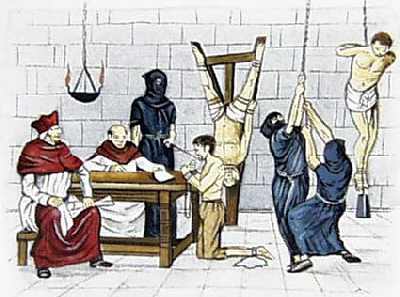
Fresh on the heels of Hillary Clinton's having been fresh on the stilettos of Rob Portman, Sen. Claire McCaskill (Confused - Missouri) yesterday became the latest Democrat to remind us she had never previously uttered word one in favor of marriage equality, thus pointing up yet again just how many liberals progressives Democrats have managed to skate without taking an actual position on a civil rights question. Thanks to the GOP being slightly to the right of Ghengis Khan on this issue, Dems have previously been able to give lip service to gay rights without actually moving their lips. But now, in the wake of Rob Portman's epiphany that his gay son was an actual human being deserving of civil rights, McCaskill, like Clinton before her, realized it was high time to get on record in regards to gay marriage before she ended up coming off as slightly less enlightened than Torquemada.
"I have come to the conclusion that our government should not limit
the right to marry based on who you love," she wrote. "While churches
should never be required to conduct marriages outside of their religious
beliefs, neither should the government tell people who they have a
right to marry."
McCaskill, who made her announcement via Tumblr, a forum of which no doubt she hoped the majority of her backwater constituents had never heard (or couldn't spell if they had), went on to say that her views on the subject, like those of manyinvertebrates
politicians, have evolved over time, but that she is now unable to look
her gay and lesbian friends, colleagues, and staff "in the eye without
honestly confronting this uncomfortable inequality."
Left unsaid was that staying to the right of Rob Portman on this issue would have justified her gay and lesbian friends, colleagues, and staff punching her in the face repeatedly.
And The Great Gay Off of 2013 continues. Can you predict which Democrat will stand up and state (or, like McCaskill, blog) the obvious next? And which Democrats will drag their feet so long that they end up not only being behind Rob Portman on this particular curve, but perhaps also behind John Roberts?
McCaskill, who made her announcement via Tumblr, a forum of which no doubt she hoped the majority of her backwater constituents had never heard (or couldn't spell if they had), went on to say that her views on the subject, like those of many
Left unsaid was that staying to the right of Rob Portman on this issue would have justified her gay and lesbian friends, colleagues, and staff punching her in the face repeatedly.
And The Great Gay Off of 2013 continues. Can you predict which Democrat will stand up and state (or, like McCaskill, blog) the obvious next? And which Democrats will drag their feet so long that they end up not only being behind Rob Portman on this particular curve, but perhaps also behind John Roberts?
Monday, March 18, 2013
It's never too late unless Rob Portman beats you to it.

Where's a fucking time machine when you need one?
After standing mutely by while her expedient husband signed the Defense Against Marriage Act back in '96, and then after coasting by on the fact that her party was the only one that even tacitly supported a homosexual's right to exist, let alone get married, Hillary Clinton watched Rob "Empathy" Portman (Hypocrite-Ohio) officially go on record as being in favor of gay marriage this past week; something the probable Democratic candidate in 2016 had never actually done herself.
And that's how we end up getting a slow Monday news story where Sec. Clinton officially declares herself to be out and proud, which is something most of her supporters assumed she had already done long ago.
Nope.
Expect Clinton to be just the first of many democrats in the coming weeks who will be having their oh-shit-come-to-jesus moments once they all digest the fact that Rob Fucking Portman was quicker to the gay marriage support bandwagon than they were.
Lost in all the ridicule of Portman for only changing his gay-bashing tune once his son made Portman realize that all that gay bashing actually affected him personally is the fact that a horde of Dems have never actually said public word one in favor of gay marriage, as they have long been able to be seen as pro-gay simply by not having an "R" next to their names. So why bother saying something that will piss people off if you can get credit for having done so without actually having to do it, right?
That changes now.
Because let's face it, appearing like you are behind the curve on a social issue in comparison to Rob Portman...
Do I even need to finish that tortuous sentence?
No democrat wants to face a GOP opponent who can claim to have been in favor of gay rights first, so get ready for The Great Gay Off of 2013 in the weeks to come.
And way to go, Rob Portman. You may be a total slime who couldn't see the frying pan until your son hit you upside the head with it, but you may have actually done some inadvertent good here. Maybe if Mr. Portman the Younger starts dating a melon picker who can't get healthcare, then Pa Portman might end up becoming an actual human being some day.
What Would Ryan Lochte Do?
Why do I get the feeling that the answer to this question is usually gonna be, "Well, dude, he would fuck it; that's what he would do."
Wednesday, December 19, 2012
Go fuck yourself, Megan McArdle

"I probably hate myself as much as you do."
Since, you know, written words can only go so far, and since Megan McArdle apparently cannot think and type at the same time, I'm going to cut and paste her droolings and then just post a short video clip in which the late sociopath Mr. Blue refutes that which I would never have thought needed refuting.
(From, appropriately enough, something called The Daily Beast)
"I'd also like us to encourage people to gang rush shooters, rather than
following their instincts to hide; if we drilled it into young people
that the correct thing to do is for everyone to instantly run at the guy
with the gun, these sorts of mass shootings would be less deadly,
because even a guy with a very powerful weapon can be brought down by
8-12 unarmed bodies piling on him at once. Would it work? Would people
do it? I have no idea; all I can say is that both these things would
be more effective than banning rifles with pistol grips."
Over to you, Mr. Blue
Friday, November 30, 2012
This shoe shouldn't be on any foot.

"I'm sure glad to see the left is coming around to my way of thinking."
There is not much to say about this shit, other than to point out that witch hunts are not okay just because they are being led by people on my side of the political isle. Stupid is as stupid does has never applied so well as it does when talking about people attacking a man (who, it just so happens, shares all of their views and goals) simply because they don't think he's funny. Oppression in response to oppression has never been an answer to anything other than the question of what is stupid and fucking counterproductive.
And while trying to get a man fired from his job (and working to make him permanently unemployable) is not quite on the level with beating a man to death because you do not happen to like what he does with his cock, defending a wrong by saying it's not as bad as another wrong that you experienced is not, I am pretty sure, a very effective argument for anything. It's also the same argument that every bigot and despot who has ever walked the earth has used before you.
Worst of all is that even with so many real world problems still to be addressed, there are hysterical branches of the very necessary activist movements out there who just go around inventing things to attack and fix.
But there are some things, no matter how unfunny you may find them, that are simply not a threat to you. Jokes about one man's balls slapping another's would be one of those things, as would be the idea of cumming on a comic book character's face.
Even were we to reach a point where women and gays had full equality on every level with the stupid fucking white men who have been oppressing them all these years, there would still not be a single reason to expend any energy on tasteless jokes about banging super heroes. Tasteless jokes neither hurt you, nor do they create an environment that would cause people to want to hurt you. At worst, tasteless jokes are the result of said poor environment, rather than the cause, but even that would be stretching it pretty fucking thin in this particular case.
Even were we to reach a point where women and gays had full equality on every level with the stupid fucking white men who have been oppressing them all these years, there would still not be a single reason to expend any energy on tasteless jokes about banging super heroes. Tasteless jokes neither hurt you, nor do they create an environment that would cause people to want to hurt you. At worst, tasteless jokes are the result of said poor environment, rather than the cause, but even that would be stretching it pretty fucking thin in this particular case.
If you have to go out of your way to find people to attack (especially when they are people who, it turns out, have been fighting on your side for years), then you are actually just as much a part of the problem as those who would deny you your equal rights.
It's a tricky thing to believe you have the right to ban that
which offends you while at the same time opposing others who would ban you because you offend
them.
That could be why the constitution does not contain anything about the right not to be offended.
Thursday, October 11, 2012
Put The Bunny Back In The Box

My thanks, per usual, to the fine Nate Silver and his FiveThirtyEight Blog for talking me off ledge today.
The difference is that we, and HuffPost Pollster, are looking at the Electoral College and the popular vote in a holistic way. The evidence is ambiguous enough that it’s hard to know for sure, but the fact that Mr. Obama appears to hold a lead in the Electoral College is reason to be suspicious that Mr. Romney leads in the popular vote.
Two of the three hypothesis yield an Obama win. It’s something of a coincidence that our model now shows Mr. Obama with almost exactly a 2-in-3 chance of winning (as do Vegas betting lines), but it isn’t the worst way to think about the election.
Also, thank you Las Vegas!
Just wish I had read it yesterday when it was actually published. Would have saved me 24 hours of tsuris.
Thursday, October 04, 2012
Crazy Like A Narcoleptic Fox?

"Even I could beat fucking Romney!"
If the President loses this election after all the hard work of the GOP to allow him an easy path to what would have been an unprecedented reelection, then I think that pretty much sums up the Obama presidency in a nutshell.
It scares the hell out of me that the GOP might get their grubby, greedy, gleeful hands back on the rudder, but I guess I should not be surprised that President O. let me down yet again. From the moment he took office, at which time he totally underestimated the size of the problem with the economy and how staggeringly difficult it would be for him to fix (especially with the guys who broke it advising him), to the way he underestimated and tried to silk glove his way with an opposition party that wanted to roast him alive, to the startlingly moronic statement he made during those first 100 days about being able to fix all the problems of the world or else "we are looking at a one-term proposition," straight on to his completely underestimating the war in Afghanistan (or perhaps embracing it---God only knows), you can draw a direct line through all of that to his completely underestimating what was required of him last night.
It scares the hell out of me that the GOP might get their grubby, greedy, gleeful hands back on the rudder, but I guess I should not be surprised that President O. let me down yet again. From the moment he took office, at which time he totally underestimated the size of the problem with the economy and how staggeringly difficult it would be for him to fix (especially with the guys who broke it advising him), to the way he underestimated and tried to silk glove his way with an opposition party that wanted to roast him alive, to the startlingly moronic statement he made during those first 100 days about being able to fix all the problems of the world or else "we are looking at a one-term proposition," straight on to his completely underestimating the war in Afghanistan (or perhaps embracing it---God only knows), you can draw a direct line through all of that to his completely underestimating what was required of him last night.
You really gotta work at it to be the most disappointing politician of my lifetime when my lifetime includes a dude who nearly got booted out of office for sticking a cigar up some little girl's hoo-hah.
Maybe he just doesn't want to be President anymore. Or maybe all the hate has got to him; maybe he's developed PTSD or some other mental problem. Or maybe he's really just a Republican in Dem's clothing and that finally caught up to him. I just don't know.
Whatever it was, those of you out there who don't seem to think this is serious must think the whole world is Barack's choir to preach to. But that wasn't a show for the choir last night. That was a show for the morons from Rock Ridge; the ones who still cannot seem to make up their minds despite the fact that it's the most black and white choice since someone held up an empty ice cream cone and asked you, "Chocolate or Feces?"
If any of you are taking comfort in 5 point poll cushions, then you're still living in 1948, and you probably didn't hear, by the way, that Dewey lost. This is the most mercurial electorate in history, and those same polls I now read some people touting as predicting an easy path in Ohio and Fla and PA and where-the-fuck-ever-else have been bouncing back and forth like tennis balls for the whole cycle now. When a guy can go from tied to a ten point lead and then back down to a three point lead in two weeks, that tells you that the electorate is dumb enough or uninformed enough, or both, that they might end up reeling into the voting booth and being surprised that Donald Trump's name isn't there for them to pick from ("When did he drop out?" they will numbly think to themselves before voting for the guy who swayed them last).
Yeah, 90 to 95 percent of the country have made up their minds, but it's the 5 to 10 percent who are left (and the 50% of them that will actually vote) who are going to decide this election, and those numskulls are still looking for something to make up their minds for them. Assuming they aren't waiting on the results of a reading of chicken guts, last night was an enormous step towards pushing them one way or the other. And for every one of those sheep who thought Romney was a dick during the debate, I have to believe there are 9 others who think Obama was in catatonic shock.
Why? Because I wouldn't vote for Romney if my balls were on fire and his sole campaign promise was to pay a private fire department to hose them down for me, and yet even I thought Obama was in catatonic shock. I may be disappointed in Obama so far but I support him to the hilt against the fruity oaty nut bars of the current day GOP, and yet even I thought Obama came off as completely incompetent and, worst of all, wholly out of touch.
Jon Lovitz is going to have a whole new skit to do soon if Obama doesn't wake the fuck up. Can anyone out there get Sam Jackson to talk to him?
Tuesday, May 22, 2012
Community, Dan Harmon & Sony: Sometimes a Cigar is Just a Phallic Symbol
See Chevy Chase Jump For Joy
This began as a comment over on Todd VanDerWerff's article about showrunners at the AVClub. If you haven't read that, you should. If you have read it and saw a really long and obnoxious comment about six pages in, then you might be experiencing Deja Vu. And if you read the article but didn't see the comment, then this may feel a bit like Vuja De.
(Although for you second timers, I have expanded the comment quite a bit, which is not necessarily a glowing endorsement for reading it, I suppose.)
For those uninterested in the original article, in it Todd discussed Dan Harmon's being fired from Community in terms of other famous showrunner/studio fights that went badly and/or public, such as those on Moonlighting and MASH, and also in terms of those that flew by under the radar, such as when the Cheers creators were forced out. He also throws in some stuff about the fight AMC had with Matt Weiner over Mad Men, the fight AMC had with Frank Darabont over The Walking Dead, and basically all the fights AMC has with everyone, possibly including random strangers AMC executives accost on the street. AMC's like the network version of Travis Bickle.
It's an interesting article, and it's notable especially for a section dealing with the difference between being a Creator and a Manager when it comes to running a television show. What it's not notable for, to me, is having anything to do with the situation over Dan Harmon getting fired by Sony. There is a major difference here between Community and every
other show Todd mentions, which is this: All of those shows were hits. They were
either just becoming hits, were established hits, or were hits that their
studios were panicking over because they were fading fast.
Subscribe to:
Posts (Atom)
And obviously, "hit" is a loosely defined term, as Mad Men draws few viewers, yet is a hit all the same for AMC. People can quibble over how much money such a relatively low rated show can generate, but it's obviously quite a bit if AMC was willing to cave in and give Matt the Weiner the tens of millions of dollars he wanted.
Anyway, Community itself is much different because it was never a hit, and so this firing of Harmon has nothing to do with trying to maintain or reestablish a hit show by altering it's creative direction. This was more about minimizing heartburn while nursing a dying animal to market before it croaks on you. In other words, I just find it very hard to believe this Harmon/Sony snit was about changing the direction of the show in order to keep it alive long term. I think this is about having fewer headaches during what Sony believes will be the final push/season to get to them to syndication.
For those who don't know, syndication is the golden calf of television. No matter the show, being able to sell it to television stations so that they can "strip" it all week (playing it at the same time Mondays through Fridays) makes more money for a production studio than anything else. A show like Community isn't going to reap a Seinfeld type billion dollar bonanza, but the difference between syndication and no syndication is many millions of dollars. And for giant corporations like Sony, even tens of dollars matter. Companies that big watch their bottom lines very carefully, and they are looking to maximize revenue every way possible. If the call is between not getting syndication money or getting it, then it's no call at all. Once that finish line is in sight, that becomes a studio's primary goal to the exclusion of all else.
In the old days, it took 100 episodes to reach that magic "stripping" level of syndication. More recently, the number everyone has been looking to reach is 88 episodes, which just so happens to be four seasons worth of episodes for a normal show order of 22 episodes per season. But in the past year or two, studios have begun to think anything in the 80 range is likely enough for them to work out some sort of syndication deal. More is always better, but anything is better than nothing.
As it stands today, with a mere 71 episodes in the can, Community is much more likely to eek out a less lucrative deal with a Comedy Central than the bigger dollar payday a deal with a TBS would provide them, so at least getting through one last 13 episode season is crucial to Sony. I think that is much more their thinking here than is the idea that they can replace Harmon now and suddenly revitalize the show into something that will reach another season or two on NBC.
Sure, maybe Sony is hoping a creative change for this incredibly low rated show will maintain or achieve a ratings level long enough to get NBC to give them 4 more (or even 9 more) episodes past that initial order of 13, thus getting them to the magic number of 88 or above, but that would have to be the maximum upside anyone at Sony is realistically considering. And even if this particular studio pulling this sort of palace coup were looked at in the light of past moves of this nature, Community is a different beast entirely from the Moonlightings and MASHes of the world. It's ratings are so low (perhaps the lowest rated show to ever be renewed by a major broadcast network), and it's new time slot on Friday is so bereft of potential new viewers, that Sony must understand that whatever miniscule number of new fans they might entice by broadening the humor on the show will very likely be offset by Harmon loving fans defecting away (as I plan to do unless someone like Todd V. tells me this fall that the show is just as brilliant sans Harmon, which I seriously doubt he will end up telling me).
So, unlike all the examples in the AVClub article, this was not a move made for long term reasons. I cannot seriously entertain the idea that anyone at Sony thinks Community will suddenly become broad based, or that there will ever be a season five, let alone anything beyond that. Oh, maybe secretly the Sony execs hope (in that small part of their heart that doesn't bleed black oil) that Community can tick up enough that it draws a ratings number that makes it decent Friday fare that is worth bringing back for yet another season, but there is no way that's a primary motivation here.
No, this isn't really about the long term prospects of this show. This is all about not having to deal with Dan Harmon during this very short time where this failed show (in terms of ratings, people, not creativity) reaches that promised land of stripped syndication, reaping Sony at least a small pot o' money that they probably never in their wildest imagination expected to see back during S2, which would have originally been the final season of Community had not NBC's entire lineup been in the toilet, and had not Sony already agreed to slash their asking price once they realized that a third season would put them in sniffing distance of reaching syndication.
So this isn't about changing the show for any serious reason other than for not allowing anything to fuck up Sony's reaching a goal they probably never seriously believed they could reach until just a few months ago, when it suddenly became apparent that NBC was still so fucked that they might just be willing to keep Community around for one more pathetically rated season, allowing NBC to have one less half hour to think about while they went about fixing all the black holes in their lineup that they still had yet to fix during the past two years.
The sad thing here is that back when Community first returned from it's very long winter hiatus, it actually appeared that Harmon himself was going to be able to stabilize Community's ratings at level that would get Sony that fourth season and all its future syndication gold. For one brief week, Community's ratings spiked upwards and made it seem that the show might be one of the least of NBC problems. But then the ratings came crashing back down, and as the show closed out its season with some of the most expensive episodes they produced this year, Community went out with three shows in a row that matched the lowest ratings it had ever received.
With the hopes that a magical ratings miracle would get them to 80-something episodes dashed, Sony likely moved to cover their bets with NBC by offering them an even cheaper deal for a fourth season than they did for the third, and NBC still only responded with a 13 episode renewal and a move to Friday nights.
So now Sony found itself in a position were they were slashing the budget for the show yet again, which is something they had reportedly been butting heads with Harmon about all year long, and now they had to seriously worry that perhaps they might not actually end up reaching any number worthy of syndication. Maybe the show gets all 13 episodes next year on Fridays, but maybe not. Friday is a lower bar to clear in terms of ratings, but it's also a night where ratings can crater quickly. In my last post I wrote that Sony probably doesn't care what the ratings are next season so long as they get their 13 episodes, and that NBC probably doesn't care either so long as Sony isn't charging them more than the most minimal amount for Community's fourth season. But anything can happen. Maybe the ratings go so low that even NBC has to cancel it after three episodes. Or maybe NBC has a miracle resurgence (HA-HA-HA-HA-HA) and can thus afford to just dump Community before it finishes it's shortened fourth season run.
Or maybe Dan Harmon has another very public episode even worse than playing private Chevy Chase voicemails in public. Maybe Dan Harmon does something so crazy that it ends up causing NBC to say, "You know what, fuck it! We don't want a season four of Community. We are tired of the nonsense, and even changing showrunners at this point is pointless."
Likely? Probably not. Possible? Absolutely. And even if it's only a 1% chance, that's a chance on missing out on millions of dollars that Sony just does not have any reason to take. They don't need a good season of Community next year; they just need a completed season of Community next year. If it's in focus and in English, then it's going to be good enough for Sony.
And then, of course, there is that beyond the pale hope against hope that Community does at least well enough to get another handful of episodes ordered, allowing them to reach 88 or more episodes and not having to worry about setting a new bar of stripped syndication at 84 or fewer. It's not really likely, but it's not impossible on NBC. It could be a back nine order, getting Community up to 22. Or it could be back four order, which would put them right at 88. And I must even admit the extremely unlikely possibility that it could even be another 13 episode order for another season, either on NBC or, as with Cougar Town, another low rated cult hit, on TBS or some other basic cable network.
Again I say, is it likely? Probably not. But possible? Absolutely.
But none of that happens if Dan Harmon fucks it up, either through some sort of bizarre behavior that results in a negative publicity wave that makes it all untenable, or through continuing to drive away any mainstream viewers that are still watching while folding their laundry or shaving their cat (which has to be fewer than 12 people at this point, but I guess you never know for certain, as I honestly believed Community had reached its ratings low point last season, which turned out to be wishful thinking).
In any case, the idea of reaching that syndication deal has got to be serious for Sony. That has to be like found money for a studio that had to sweat out even the Season Two renewal, which wasn't a sure thing by any means despite Community pulling ratings back then that today would guarantee Community a renewal on NBC. But back then NBC was still under the mass delusion that they were a major broadcast network, and so back then everyone was on pins and needles waiting to see if Community could even get that second season. Back then this idea of syndication wasn't even a glimmer in anyone's eye, and so right now there is no way that isn't priority #1 for Sony.
How close was Community to getting cancelled after it's first year? Close enough for Dan Harmon to record the video at the top of this page, which shows him informing a clearly nervous cast about their renewal by telling them, "Sorry, you all have to work with Chevy Chase for another year."
Ahh, the halcyon days of the Chase-Harmon relationship, eh?
This firing wasn't a battle over the soul of the show, or even over what the network wanted creatively. Dan Harmon already won that battle for us, putting on the show he wanted to write and that we few (we happy few) wanted to see, apparently burning a few bridges at Sony in order to do so. So this firing wasn't like any of the previous famous showrunner ousters. It wasn't about Sony taking creative control of a once successful show in order to try and get more seasons out of it. No, this was about not having to deal with any more pain in the ass bullshit during what will likely be the last few months this show is ever in production. This was about making a near certain death decidedly more painless, rather than continuing on with what it sounds like was, for Sony anyway, an excruciating life.
And just in case you read this far without quitting early so you could start replying about what an asshole I am for saying mean, pragmatic things about Dan Harmon and his tenure as a showrunner, let me boldface this for you:
I FUCKING LOVE COMMUNITY! I AM DEVASTATED THAT HARMON GOT FIRED. I'D LIKE TO FREEZE HIM WHEN HE"S NOT WORKING IN ORDER TO EXTEND HIS LIFESPAN SO HE CAN PRODUCE GREAT SHOWS UNTIL THE YEAR 2223!
I want him to be the fucking Winter Soldier of television comedy.
But this was not a Cheers/MASH/Moonlighting situation. This was: "We just need to make it through another six months before we don't give a shit about this show anymore, so do we really need this pain in our balls around for that?"
Sadly, the business answer was no.